
record details.
| interview date(s). | November 22, 2024 |
| interviewer(s). | Julia RushSam Herr |
| affiliation(s). | Salt Institute for Documentary Studies |
| project(s). | The Salt Institute Oral History Project |
| facilitator(s). | Molly Graham |
| transcriber(s). | Molly Graham |
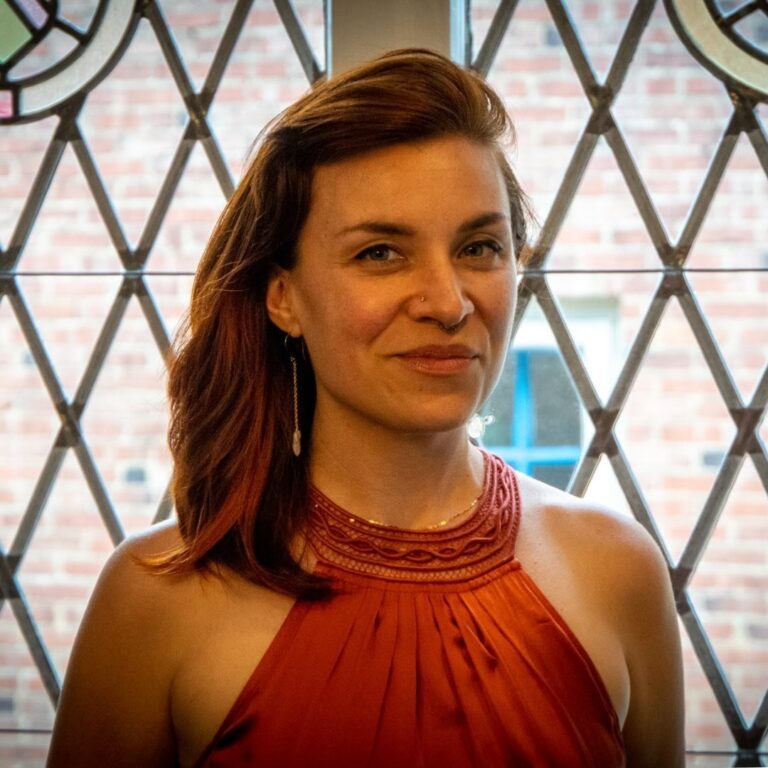
Oral histories about the Salt Institute for Documentary Studies, a 50+ year documentary program based in Portland, Maine and now housed at the Maine College of Art + Design.
Julia Rush: [00:00:00] Okay. Are we ready to get started?
Casey Georgi: [00:00:02] Ready.
JR: [00:00:04] Okay, I’m asking the first series of questions. Like I said, we’re trying to facilitate and not ask one-word answer questions. Looking at the sheet that you provided – thank you for filling that out again. That was really helpful. You said that you grew up in New York, in Nyack. Am I saying that correctly?
Casey Georgi: [00:00:33] Yeah, Nyack.
JR: [00:00:34] Nyack. And you grew up in a house built in 1850, so I want to start there, and what that was like.
CG: [00:00:43] Yeah, sure. It’s pretty unusual. The house was built in 1850, and it was a farmhouse. It was a one-room farmhouse. This is what I know, basically, from the people in my family that are still around. It has a pretty long legacy. My father, who was born in 1927, was born in the house, and it was the only house on our street. When I say farmhouse, literally a farmhouse; there were animals. He ended up staying in that house, and his first wife collected animals. She just loved animals. So they had alligators in the basement and horses. This is really bizarre to think of. I can give you the address. You can look it up because right now it’s very suburban. There’s a college around it. It overlooks the Hudson River. So, to think that this used to be this rural area with horses and alligators is wild. But growing up in a house like that definitely had its challenges because everything was very antiquated. Everything was constantly breaking. It was very cold. It was very hard to heat. It was very spooky. I’m an only child with a big imagination, so my default was it’s haunted because it looks like a haunted house. It’s old. It has these old shingles. It was always making strange noises at night. My mom would say the house is settling, which I still don’t really understand, but they’re just these loud creaks, and it just sounded like footsteps and things whispering and things closing and opening. Because it was an old house, things were always in disrepair. It was very interesting. To this day, my mom still lives there. It actually made it to Nyack’s houses – the Historical Society of Nyack. So it’s now a historical site. But it needs a lot of work. We just haven’t been able to keep up with it because it’s a lot of money. It’s very expensive. A lot of stuff is – yeah, I mean, at this point it might be sort of a bulldozer situation in the coming years, but that’s a conversation I have with my mom down the road.
JR: [00:03:10] Yeah. That’s a great place to start. I did look up where Nyack is, and it’s pretty close to New York City. What was that like? Did you visit New York a lot when you were a kid? Or did that play a role? Were you visiting New York at all, or spending time there? New York City. Sorry.
CG: [00:03:31] Yeah, you’d think so. I think in elementary school, we did a couple of field trips. We definitely went to the Museum of Natural History and the Bronx Zoo. But growing up, I didn’t have a lot of interest in New York City. I was sort of overwhelmed by it. I could see parts of it from my house, but didn’t have a huge interest in it. It didn’t have a big – it didn’t play a big role in raising me or anything. I didn’t make lots of trips there. You’d think so, because I think a lot of people really romanticize New York and travel from near and far to go there, and I was so close, and I just didn’t have a huge interest in it. Maybe because it was so close, I didn’t have that much interest, because I’m like, “Oh, I could go there anytime,” but I didn’t. I did later on in life end up moving there and living there for many years.
JR: [00:04:28] That’s really interesting. It is very romanticized. Backing up to your childhood, you described being a little bit lonely without siblings in the house and being in that big house. What did you do to keep yourself busy with a wild imagination?
CG: [00:04:52] Yeah. I was very good at occupying myself as an only child. I had a lot of pets. I had rabbits and hamsters, and I was really into building stuff for them. My mom thought I was going to be an architect. I would make these very elaborate blueprints for them for these extravagant houses I wanted them to live in. I never ended up building them, but I really liked the idea of them living in these elaborate mazes and things like that. I created quite the life for my pets. I had a rabbit, and I would read to her. I often read Charlotte’s Web and animal-friendly books because I thought she could relate to it. I was like, “Yeah, there should be animal characters in this book so she can relate to the story.” When we finished Charlotte’s Web, she graduated, and I gave her a graduation ceremony. What I did was put her in a cardboard box with a string taped to it, and I would drag her around the house. I made her a little cap and had a ceremony, and my mom thought it was hilarious. These were just things that I did because I was like, “This is fun. Graduation for a rabbit.” Certainly, I had Beanie Babies and dolls and gave them very elaborate lives. I guess I was a pretty early storyteller, and making these fantasy worlds for these inanimate objects and animals. I also was really into art, so I did a lot of drawing. I mentioned the blueprints, but I also doodled a lot. Me and my friend had a cartoon that we created about two dogs that skateboarded, called “Spencer and Julian.” One of my earliest childhood goals was to be an animator for Nickelodeon. I watched a lot of TV. That was also something I did. But a lot of my ideas were from Nickelodeon, and I was really into cartoons. I was really into drawing cartoons. I was pretty busy thinking up games and playing with my pets, and playing with my dolls and stuff. I did have friends, human friends outside of the house, and would have playdates and stuff like that. I think the loneliness really sunk in in the summertime and in holidays and stuff because I had friends who had these big families, and they would travel, and they would go to camp, and they would stay with cousins and stuff like that. Or in Christmas time, I was very bored, very lonely. I didn’t have all the cousins and the aunts and uncles coming over. It was just me and my mom. I wanted to hang out with my friends, and they’re like, “My whole family’s here. I can’t go anywhere.” So those were the moments where I kind of felt like – I could go draw and play with my rabbit as much as I wanted, but I wanted to have a family and some more things going on in the house.
Sam Herr: [00:07:56] You mentioned your mom. In the survey that you filled out, you shared with us that your dad died when you were one, and so it really was just you and your mom. What was that like for it to be you and your mom growing up?
CG: [00:08:14] Yeah. It was tough. My mom never really recovered from my dad’s death. I’m thirty-six years old, and every time I talk to her, she finds a way to still bring him up. I don’t think she’s ever really fully recovered or fully grieved his death. A lot of my childhood was that. It was feeling my father’s absence constantly. My mom would tell stories about him. We had photos around the house, but she was just beside herself. I mean, she was very depressed not having this person in her life and being a single parent with a newborn. I think growing up, I mean to be very candid, it felt hard because my mom spent so much time and focus on someone who wasn’t with us and less time about me and the person that was in front of her, that was living and there, and that was something that I had brought up to her a few times, and it was really hard for her to understand because I don’t think she was aware that she was grieving so much and mourning this person while ignoring someone who needed attention and was lonely and an only child, and needed some sort of acknowledgement and recognition. So, we don’t have the best relationship, but we got through it. I think the first eighteen years living in the house, an old, creaky house with someone who was very depressed and grieving was difficult, and then once I left for college and have paved my path, it’s gotten easier and our relationship’s gotten a little better. But it’s something that even now I’m exploring about grief and how people deal with things like that. It’s given me a lot to think about, and I’ve had a lot of therapy.
SH: [00:10:34] Yeah, thanks for sharing that with us. Does it feel like there’s a connection to you between that experience and possibly your interest in storytelling and music? If so, can you share more about that?
CG: [00:11:01] Yeah, I’d be happy to. I’ve given this a lot of thought. I think also with my cover letters to all my jobs, you really want to stand out and you won’t have a good story, but then it turns into sort of this therapy session where you’re like, “Why am I doing this? Why did I get here? How did I get here? Why am I a storyteller?” Being a small child who’s very lonely in an old house that made lots of very strange noises in the night and feeling a bit neglected by my parent, I spent a lot of time listening to music. I spent a lot of time listening to, at the time, books on tape. Audible was not a thing. Audio books were not a thing. I’d get things from the library. At night, there was this draw to listen to things to go to bed. I would often listen to a book. I listened to people speaking poetry. I listened to music because I wanted to cover up the sounds of the house that made me scared, and that gave me a lot of comfort. On the less depressing side of things, I think being with my animals and with my toys and having those stories were really important for me, too. I really harnessed that creativity of creating these imaginary worlds for my pets. And maybe, if we really want to analyze it, it was a way of me creating a world that I wish I was in for my pets. I also apologize. My cat is yelling outside my door. Can you hear that? She’s very loud. She doesn’t like when I close the door. That was the beginning. Then, in high school, I got into music. I started playing the electric bass, which you can see right behind me, even though this is an oral history. There’s a bass hanging on my wall. Then I got into the double bass because I felt like it was more versatile than the electric bass. Electric bass is kind of – it’s easy to pigeonhole yourself into rock and roll and funk, but double bass, you could do classical, you can do jazz, you can do bossa nova. I was like, “Yeah, I want to do that.” I was listening to all this music in high school. I was really into old swing, big band music. I’d go to bed listening to Frank Sinatra and all these crooners. I don’t know what happened, but this was – I was really into ska. I was into all kinds of stuff. I wanted to play that music. Then, in high school, I joined the orchestra. I was playing this music. My music teachers were excellent storytellers, and I really looked up to them. I credit them with helping me get out of this dark place as a teenager, as someone who is struggling at home with a parent that didn’t see me or understand me. Music was sort of like my way of getting out of that place. I quickly realized I want to be a music teacher because I felt like there was so much to that than just playing music. The teaching part I loved. I loved working with kids. I loved dissecting music and understanding composers, and understanding music, and the stories behind those. I started conducting in high school. My band teacher gave me the opportunity on the podium and conduct the band, and I used a lot of opportunity there to not just give direction, but tell stories, too, about musicians or about the piece we were learning. I loved it. It felt so good. It felt right. So, I went to music school, and that’s, I think, the beginning of it all, the genesis of how I got into podcasting because shortly after that – I’m trying to get through this, because I’m talking a lot. But after college, I decided maybe it wasn’t for me, which I know sounds like a strange thing coming from this place where it felt really good and very right to a place where I wasn’t so sure about myself. I had a lot of performance anxiety, and podcasting or radio was a really easy transition, because it still held a lot of the same aspects of being a music teacher in some ways. It’s very didactic. You can learn so much from audio and radio, from storytelling. It’s sound-rich. It’s all sound. This is such a natural transition, but it’s a little less pressure than the performance aspect. It’s a little less competitive. It’s different than working in a public school with kids and dealing with administrations and bureaucratic red tape and all that. That’s kind of how I found myself here. Now, it kind of makes sense coming from that little girl in her room who was scared of the noises in her house, to being a music teacher, to someone who likes to tell stories and focuses her life on audio.
JR: [00:16:24] Yeah, wow. I want to back up a little bit because you just gave so much great background. In high school, that was around the time when you started playing instruments. That became that outlet for you, the creative outlet.
CG: [00:16:50] Yeah.
JR: [00:16:51] Were you still drawing and doing things like that, or did music become this bigger outlet, I guess?
CG: [00:17:04] Yeah. That’s a good question, actually. Yeah. I don’t know what happened with drawing and the visual arts, but I sometime around late middle school, early high school, when I started to get into music, that took over my life, and I suddenly didn’t have room for that, and I never really looked at art and drawing in a professional sense. Yes, I wanted to be an animator for Nickelodeon for a short time, but I never thought of it as a career path for that much longer than that pipe dream. It was all just for fun. Then, I think the music just really consumed me. I think also, as someone who started really late in life, you hear these stories of kids starting when they’re five, or generally in fourth and fifth grade, they put an instrument in your hands, and you start playing. I didn’t do that mostly because we didn’t have the money for it. We couldn’t afford to rent an instrument, buy an instrument, or take lessons. So, I was in chorus because that didn’t cost money; you just go and you sing. I was singing and stuff, and I enjoyed that. But when it came to high school, I was able to save up money and pay for my own lessons and buy my own bass, and then take some music electives in high school. I think I was so consumed with this new, exciting hobby and interest of mine that it just took over.
JR: [00:18:29] In high school, you then decided, because of that interest, to pursue music education in college. I know you said you listened to audiobooks and poetry reading. Do you remember any audio stories that really struck an interest in that specifically, or maybe a moment that that kind of piqued your interest in that direction with audio?
CG: [00:19:14] I wish I could remember what I was listening to as a kid. You’d think that would be something that would be ingrained, but it’s not. I think at the time, maybe it wasn’t so much the content as much as just having sound in my room to cover the noises. I don’t remember the audio books. I remember later on, when I got into audio and radio, what I was listening to, and I’m happy to talk about that later or now. Yeah, I wish I could remember. Yeah, I’m sorry. That’s not very helpful.
JR: [00:19:55] No, no, that’s okay, because that means – it’s like you were saying; it was about the audio. It was about having that filled out space. That makes sense.
CG: [00:20:09] Yeah. I will say just as a side note, we were not an NPR [National Public Radio] household. I didn’t grow up listening to the radio in the car or in our house. My mom was a very visual person, always had the TV on. We had three TVs. I don’t know why we had so many TVs. It was just like a TV in every room, which also – something to think about – I think that was her way of coping, too, is just having the TV on all the time and having that noise. For me, it was just the audio element. I didn’t really actually get into NPR and podcasts until 2008 or ‘09, I think.
SH: [00:20:51] We’ve talked about childhood and how you got interested in music, and then you did music education and that transitioned into now working in audio and all of that. Are there certain memories or defining moments or influences that paved that path from the music into audio?
CG: [00:21:33] Yes. I would say around 2013, I was taking a break from music. I was giving private lessons and freelancing, substitute teaching, and this was the time when I graduated, and I was second-guessing my career choice, just having second thoughts about who I want to be as a teacher. I mentioned the anxiety about performing, and I think I was losing sort of some of the passion for what I wanted to do, especially after college. That happens. I tell people I don’t recommend music school because it does take a lot of joy out of it. So, I was in my twenties, and I was spending a lot of time bouncing around and doing different non-music-related things. This is when I moved to New York City, and after I put teaching on pause, I started doing some less fun jobs, not music-related, to give me a chance to do some soul searching and figure out what I needed to do, and then also make money. I was working at a digital marketing company, and I had a really nice thirty-minute commute of just walking to work in midtown Manhattan, and I was spending a lot of that time listening to podcasts. I am going to go back a little bit. Let me just say that when I was at the tail end of music school, I was doing my student teaching, and I think I just had ear fatigue of listening to music, listening to rehearsals. A way to kind of break up listening to music and being very analytical was listening to podcasts. I would say probably the first one that I really started listening to was The Moth. That was just very accessible to me because it was just straight up storytelling, no razzle dazzle, nothing too fancy, and I would go to sleep to that sometimes. I would just lay in bed, and it felt very intimate because the lights would be off, and it felt like someone was just talking to me. Most of the time, I couldn’t fall asleep because the story was so engaging that I would be laying there crying or laughing, and I’m like, this isn’t helping me go to sleep. It’s just getting me more jazzed. That was a really nice break for me. So, fast forward, when I’m in this moment of transition saying, “I don’t want to pursue music. What am I going to do?” I was listening to a lot of podcasts. Beyond The Moth, of course, I moved on to This American Life and Radiolab, and I spent my time listening to those every day when I was commuting to and from work; I’d be listening to an episode or two, and I remember the specific day. I was walking. It was probably a Thursday or something. I was listening to Radiolab. I cannot tell you what episode it was, but I can tell you that at the end, they were talking – they were at the credits. This is the funny part about the story is that I had my sidewalk moment, my driveway moment, stopped in my tracks because they started talking. They were naming all the people in the credits, and they’re talking about what they do. Like, “The story editor is this, this person who’s the producer did this.” I was like, “Oh my god, this is someone’s job. Someone does this. People do this for work. This is so awesome. Oh my god.” Here I was, listening to stories and being blown away, but then I’m like, “Oh my God, you could do this. Of course.” So, I got obsessed with that idea of, “Oh, my God. I could teach people still, and I could still do audio and things that involve music and stuff, but it doesn’t have to have all this baggage with a school system and performing. That quickly became my new obsession and my new passion. I would spend a lot of hours at this marketing company. I was basically the office manager. I didn’t have a lot of work to do, so I made it my full-time job to hunt for internships and jobs in radio and audio. That’s all I did was look for other jobs. Salt was something that came up in the process when I was like, “What do I have to do? How do I get into this world? I have zero experience. What do I do?” It was like, Salt.
SH: [00:25:59] Thank you for that transition. So, Salt came up in a Google search for you, basically, is how you found Salt.
CG: [00:26:10] So not Google, but LinkedIn. I started stalking people who were radio producers, who worked for Radiolab, and it was like, “I attended the Salt Institute,” and then I’d click another one, and be like, “I attended the Salt Institute,” and I’m like, common denominator. I see. This is it. This is the path.
SH: [00:26:30] Can you share more about this path? You’re clicking on LinkedIn, you’re finding Salt, then what happens?
CG: [00:26:41] Yeah. Well, it was funny because actually, Radiolab did a callout for one of their episodes. They wanted people to meet in McCarran Park to just be a crowd. I was like, “Oh, my God, my dream come true. This is my moment.” So, I go to the park and we’re doing some shouting and stuff because Jad [Abumrad] needs sound on tape. He needs it to be authentic. I saw the intern there, and I very politely, but sort of gently accosted her, and was like, “How did you do this? What did you do?” She’s like, “I went to Salt.” I’m like, “There it is, once again.” I’m like, “Okay, great.” I go back to the web, and I find Salt. I do some research. I’m like, “Cool. I think this is it. This is the path.” It was funny because I don’t know the exact year. 2014. And I called them. I was like, “Hi, listen, I’m really interested in this. I don’t have a lot of experience. How can I apply? Blah, blah, blah.” This is pre-MECA [Maine College of Art]. The woman was – I don’t know who she was. I don’t think she’s there anymore. She was very disgruntled. She was not very nice to me and kind of discouraged me from applying, which I found really off-putting. I was like, “Okay.” It was sort of like, “Oh, you don’t have any experience. Yeah, I don’t know. Blah, blah, blah.” I was like, “Wow, okay, that sucks.” I felt really bad. I gave up on it temporarily. I want to say literally, weeks or months later, they announced they closed. I was like, “Oh, maybe she couldn’t tell me that they were closing, but maybe she was really upset and giving me the sign, like, ‘Listen, we’re closing. We’re not taking any other people. Don’t waste your time.’” That was heartbreaking. I was like, “Oh, my God.” That was right when I was going to apply. Fast forward, I’m doing all this stuff. I’m trying to figure out what I want to do because I was like, “Oh no, Salt’s not a thing.” I wanted to make my own podcast. I didn’t know how to do it, and I was scared. The best I could do was – I worked at a coffee shop in Midtown called Stumptown Coffee Roasters, and I would practice my radio voice when I was talking to customers. I didn’t tell them that, but I would be hearing, “This is NPR,” but I’d be like, “What can I get for you?” “Cappuccino.” That was like me practicing to pass the time. This is me going back to being a little kid and keeping myself busy. I’d tell people, I really want to make podcasts. I really want to do this. I did a few interviews. I wanted to make a show called “The Regulars,” and it was about the people that came into the coffee shop that I saw every day. I wanted to learn about their routine before they walked into the coffee shop because I was like, “I know so much about you. I see you every day.” It didn’t go anywhere. I did three interviews, and I didn’t put it anywhere. I didn’t know what I was doing. I was editing in GarageBand. I think I recorded them on maybe a Zoom1. But then what happened – it was very serendipitous. You’ll notice I went to a community college after I got my bachelor’s for broadcast journalism because I was like, “Okay, Salt doesn’t exist.” I didn’t want to go to grad school. I wasn’t quite ready for J [journalism] school, and I didn’t have the money, so I was like, I want something affordable, something that can give me just a little bit of experience. Since I lived in Ithaca, went to school up there, there’s a community college called Tompkins Cortland Community College, also known as TC3. They had this program. It was a year-long. I was like, “You know what? I’ll work. I’ll live in a little cute house in Ithaca and go to this program, get some on-hands training about how do I do this and have something on my resume that’s related?” Because right now all I had was music, coffee, digital marketing, nothing that felt transferable, and also it would help me maybe get an internship. So, I do this program. It’s not great. It’s not very good. But in the process, as I’m finishing up in 2016 – no, it’s 2017. Salt reopened. They announced they reopened. I was like, “Oh, my God.” The timing was perfect. I just graduated from this program. I met a professor who had an incredible story about surviving a tsunami in Thailand. It was the first story I produced, and I submitted that for my Salt application, and I got in. This was the inaugural class at Salt when MECA took them in. The timing could not be [more] perfect. I was part of the 2017 inaugural class at the Maine College of Art. It was very cool and very good timing.
JR: [00:31:57] That’s really interesting, that arc. So, you started Salt. You moved to Portland for a short time for Salt.
CG: [00:32:10] I did, yes.
JR: [00:32:12] Yeah. Could you tell us about that? Your experience of Portland and in Salt?
CG: [00:32:17] Yeah. I was very lucky. I was living in Ithaca. I applied. I got into this program, and I was like, “I’m moving to Portland.” This was great because this was my twenties, and I was not tethered to one place. I grew up in the same house for eighteen years of my life, and after that, I lived in a different house and city every other year. That was my path. So, I went on Craigslist, and I actually found a woman in South Portland who was renting out a room, and it was perfect. I drove up there, and we checked out the space. I was with my half-brother at the time, and she seemed really cool. She was like, “Yeah, it’s monthly,” which is perfect. There was no lease. I know how much Salt students struggle with this; finding housing in Portland is such a nightmare, and it’s gotten so much worse. To find something where I didn’t have to sign a two-year lease, and it wasn’t super expensive, and it was fairly close, and I had a car, so South Portland was fine. I moved up there in – I want to say July of 2017, so I was there a month before Salt started because I strategically wanted to get comfortable living in a new place before I started a new program. I was like, it will just be too much for me to start a new program, living in a new place with a stranger. I got a job at the Speckled Ax, which was – it’s basically across the street from the Salt Institute. So, I was working there. So, by the time school started, I knew some people in town. I knew the bars. I was driving around. I had gone on a hike. The eclipse was that year, and I went and saw it. So, I felt pretty comfortable when school started, so that was great. Our class, I think – I don’t know if this still holds true, but it was one of the biggest. It was nineteen people, which seems quite big. I was sad because I applied to also do the writing program, and they got rid of that, and then it became just the visual and the audio sections. We had twelve audio – radio and podcasting – students, and then seven film and photography students. Yeah. It’s a very special class. We all really got along and really clicked immediately. I don’t know if it was because of our shared interest wanting to do Salt and it closed, and then it reopened. We had a very diverse class in terms of ages. We had people who were fresh out of college at like twenty-one, twenty-two, to people in their fifties and possibly sixties. I liked that most people were not coming from journalism. I was really afraid it was going to be a lot of journalism students, but they were like me. I had my music background, and this was sort of a second career for me. A lot of people were on their second or third career. Let’s see. At the time, Annie Aviles was teaching, and Colin – it’s so bad. I want to say Colin Jost from SNL [Saturday Night Live]. It was not Colin Jost. It was Colin Cheney. He taught writing. We had our audio classes, Monday, Tuesday, Wednesday – or no, Monday, Tuesday. I don’t know if this is the same. And then Wednesday, we had our writing seminar, is what they called it, with Colin. Then I would work Thursday through Sunday at the coffee shop.
SH: [00:36:09] Can you share some of the things that really sparked your interest while you were at Salt?
CG: [00:36:23] Well, first of all, I was very excited – I don’t know if anyone says this – to learn ProTools because I was kind of a technophobe. When we first started, I remember the weeks leading up to Salt, I was Googling DAWs [digital audio workstation], and I was like, “Oh, my God, what am I going to do?” I had only used GarageBand up to that point. I explored Hindenburg a little bit because Transom was all about that, which I do love Hindenburg. Now, in present time, when I teach students, I usually use Hindenburg if they’re very new. But, yeah, ProTools was so scary. So, I was like, “Oh, great. They’re going to teach me ProTools. This is going to be so cool.” That was its own headache. Fortunately, I sat next to a really – she’s still a very good friend of mine, Samira Tazari. She is a tech whiz and had studied radio and film in school. She knew ProTools really well, so she was the one that we would all run to in class, like, “Help, help, all my files can’t be found. What happened?” Or “It’s so loud.” A lot of panicking moments. She was next to me, so it was really nice because I’d be like, “Hey, how do I erase this? How do I make this sound good?” I was very excited that they would be teaching us ProTools, also, because then it was this is the industry standard and you see this everywhere on job applications. I was excited about that. Also, one of the biggest takeaways for me was doing the round table editing. It was very nerve-wracking. When I think about it, it still makes me a little nauseous and a little scared, but it was so helpful to come in with your idea, with your peers around a table, and just be like, “I’m thinking about doing this story. I think it’s interesting because of this. What do you think?” And then everyone’s kind of dissecting it, like, “Yeah, yeah, I think it has some legs,” or “Did you consider this?” or “Yeah, I don’t know. I think someone did a story about that, but maybe you should talk to them.” I miss that collaboration so much to be able to turn to someone to just be like, “What do you think of this idea?” Or doing our table reads in class, too. Those were really scary, but I think they were really good because in my career, I’ve had to do those, and they’re never really easy, but I had that experience of being like, “Oh, yeah. Okay, here we go.” This is going back to my music school days of the performance aspect is back to some degree, of here’s my work, and now you all have to criticize it in front of me, and I have to be really brave and strong and just take it. So, that was great. Definitely going out and interviewing people. I don’t know if you all still do this, but the first thing was the vox pop. So that was like, if you’re scared, too bad. Go out and you stick a microphone in people’s faces and see what happens. I’m not the most introverted person, but that was definitely something where I’m like, “What? I don’t want to bother people. I don’t want to do this.” But it was really good for me to do that because then I ended up having to do stuff like that in my career. So, yeah, I’m glad. They really equipped you for certain things that are very awkward in this industry, and you get over – or the cold calling, the cold emailing, things like that.
JR: [00:39:55] This is out of curiosity. Did you have a favorite project that you worked on or a project you were really particularly proud of? Maybe the process of it or the final product or both at Salt?
CG: [00:40:11] Yeah. There’s a few, and I’m not tooting my horn. I’m just thinking fondly of the experience. I did really like the twenty-four hour documentary. We went to the Cumberland Fair. That’s what it was, Cumberland County Fair, and I had two people on my team, one radio person, one film or photography person. We spoke to a family that cleaned the bathrooms at the fair. They have a long generation in their family of doing this. They are the in-house cleaning team that has this legacy at this fair. The way I discovered them was I went to the bathroom, and this woman was in there singing. She’s blasting music. She’s having the time of her life. I left the bathroom, and I turned to my colleagues, and I was like, “She’s having a really good time. I think maybe we should just talk to her because she seems so fun.” Then it came out that she’s like, “Oh, yeah, my brother’s in the men’s bathroom. My uncle is in this bathroom on the east side, and his dad used to do it, and his brother-in-law did it.” We were like, “Whoa, that’s really fun. Let’s talk to them.” So, we just started talking to all the family members. We’d just go to different bathrooms and talk to the family members. Then, turning that around, it was just really fun. The piece itself is fine. We only had, what, two or three minutes, so there’s only so much story you can tell, but the process of working on that together was really fun. And then I would also say I liked my profile piece. I found this guy on Craigslist. Yeah, I don’t go on Craigslist much anymore, but I feel like as a novice reporter, Craigslist was my thing, and I found this guy who lived off the grid in upstate Maine in the middle of nowhere, who taught survival classes and lived off the grid. I had a male classmate go with me because so many people were like, “This is dangerous. You’re driving two hours to go talk to a man with no cell service, no one’s around, he posted on Craigslist. How does he even have internet service? What are you doing?” We had all these protocols in place. We texted Annie. I talked to the local police station. I was like, “This is where I’m going to be.” They’re like, “Oh, yeah, Richard. He’s fine. He’s harmless.” I was like, “Yeah, but can you just, I don’t know, drive by once or twice, just check on us, because we won’t be able to call you. I just want to make sure I’m okay.” Obviously, it was fine. I’m here to tell the tale. Richard turned out to be this really cool guy. He teaches Transcendental Meditation. He’s just really such a – he loves just being alone. He told me how he hunts squirrels and eats squirrel meat, and he chops a lot of wood for the winter, and just a hardcore Mainer. I loved it, and I loved the process, even though it was very scary at times to think, “What am I doing here for a story?” But I was really happy with that. I kept it non-narrated because he was living in the woods, and I thought inserting myself didn’t really work for the piece. That was also my first exploration [of] non-narrated storytelling, which I really like. I would say, yeah, those two pieces really stand out to me mostly because of the process and doing something collaborative with one of your classmates.
SF: [00:44:01] Did you have a feature project as well that was part of your Salt experience?
CG: [00:44:08] I did, yeah.
SH: [00:44:12] Can you share about the process of doing your feature and finding a topic and how you felt about it?
CG: [00:44:20] Yeah. It’s also very timely because I just saw some news about it. So, I was really under the wire. I think it was like, down to – we needed a story with – I had a day or two left. Some of my classmates came into Salt and already had ideas for their feature, which I would encourage people to do that. I just didn’t have that hindsight to do that. I just was like, “Oh, I’ll find something.” I’m scrambling. I’m looking all over town. I’m looking at the postings on the bulletin boards. Because I was living in South Portland, I decided to go to this little downtown Portland-South Portland area. I started just walking into shops and talking to the people who own these shops. I went into – it was, I think, an antique store. I was like, “Hey.” Because I’m thinking, Oh, he’s into antiques. Maybe there’s a story here. Maybe there’s something attached to these items or he meets these really interesting people, blah, blah, blah. So, I’m like, “Yeah, do you,” more or less, “have a story? I’m a student. I’m looking for something.” He’s like, “I don’t, but if you go a few doors down to Taco Trio, they have a good story. The owner of Taco Trio, Manny Peña, was battling cancer, and his wife helps run the place.” I’m like, “Okay, I’ll check it out. For sure. That sounds good.” I go into Taco Trio, and I don’t think either of the owners were there, Karen and Manny, but I left maybe my name and number with one of the cashiers or chefs. I was like, “Hi, I’m a student. I heard they have a really incredible story, and I’d love to talk to them, if they’re open. Please have them give me a call.” I was driving, and Karen called me, and I pulled to the side of the road. She just completely unloaded and was like, “Oh, yeah. My husband came over here from Mexico. He’s undocumented, but he’s been in the US most of his life. We met at a Mexican restaurant, ironically.” I think it was like Georgia or something. Fell in love. They moved up here to Maine, started their own taco place, were madly in love, and then Manny was diagnosed with stage four prostate cancer and was given a pretty grim prognosis. He didn’t have very long to live. He wanted to do treatment, but there was very expensive treatment in New York, and it was cheaper to actually go across the border to Mexico to get this treatment. He decides to do that, which is super risky because he’s undocumented, and goes there. He also sees some of his family members, too, because he’s thinking, “Okay, this might be it. I might not have much longer.” And gets detained at the border, going back to the US because he also has medical marijuana, which they flag. And they’re like, “Why do you have drugs?” And he’s like, “This is for my cancer. I’ve been here for a treatment.” These border guards are harassing him. He’s terrified. He’s like, “Oh my god, I’m not going to be able to make it back home. I’m stuck here. I’m sick.” Through calling senators, I think it was – not Susan Collins. Who’s the other senator in Maine?
SH: [00:47:45] King.
JR: [00:47:46] Angus King.
CG: [00:47:47] Angus King. He hooked it up and was able to help them. He was like, “Listen, I know Manny, and he owns a business here, and he’s fantastic. He’s a good citizen.” Blah, blah, blah. Worked his magic, and the guards were able to release him. He was able to come back to the US, and the treatment was successful, and he was able to live much longer and was very happy and healthy from there on out. So, it was this happy story. But I just saw in the news recently that he passed. But that was back in 2017, so another eight years of his life was gained from this. That was my story. It was very heavy. I think I did about two interviews with them. I did go down, and I got some audio from their restaurant, but it didn’t end up making much of the story. The restaurant wasn’t really the biggest part of the story. Manny and Karen came to my house, and I did an interview with them, I think twice. I can’t remember too much about it. I think they did come to the final show and listened to the story, and they were happy with it. I think at some point it did air on Maine Public [Radio] or something like that. I really enjoyed making that story, but it was definitely my first feature, and now I don’t know if I could listen to it because when you listen to old work, you’re like, “Oh.” There’s stuff I would change. I remember feeling really uncomfortable with my narration. I just felt like I was stepping on the story too much, like I was talking too much, and it wasn’t enough of Karen and Manny telling their story. I remember Annie being like, “It’s fine. No, it’s good.” Now, I’ll listen to NPR pieces. I’m like, “Yeah, I guess they do talk a lot and just have these sound bites of the people.” So I guess it worked for a feature. But I think if I went back in time, maybe I would take a lot of myself out.
JR: [00:49:47] That makes me think about – you were talking about your interest in audio storytelling and how that was your journey to Salt, and then doing audio storytelling for the first time and having those experiences. Then post-Salt, did it change your perspective at all, as far as what you wanted to create in audio? Or did you learn about a new type of storytelling that you were interested in in Salt, that you were like, “This is what I want to do?” I’m just curious about that.
CG: [00:50:30] I think a lot of that happened outside of Salt, but I do feel like towards the end of Salt, I knew that I didn’t want to do news. When I first got to Salt, I was like, yeah, working for NPR, that’s the goal. That’s what you do if you want to be successful. Now, I don’t feel that way. I just don’t think I was cut out to do fast turnaround news reporting, hard, fast reports. Like I said, with the feature too, I was happy with it, but it did feel a little stifled. It feels a little less personal when you report like that. Same goes for writing a newspaper. I’ve tried to do that, and I just don’t love that kind of writing because it takes the feeling out of it because you have to report with a lot of – very balanced, but it comes off very dry. I think with my music background, I was much more interested in doing some more experimental stuff. When I left, I was like, yeah, I don’t think NPR is my direction. I would love to do more experimental stuff, stuff with a lot of sound. Radiolab was still very much a big part of my media diet. I also got into a lot of stuff that Glynn Washington was putting out at the time. I think in 2017, he came out with Spooked and Heaven’s Gate, and those are incredibly sound rich pieces. I was like, “Yeah.” I love the non-narrated – oh, and also Love and Radio, anything like that. I was like, yeah, I don’t want my voice in it. I want someone to tell a story, and I want to put some sound under it. That’s what I want to do.
SH: [00:52:09] What would you say your takeaways were from Salt or what did Salt give you?
CG: [00:52:26] I was very proud of the portfolio I left Salt having. I walked in there with having one, one and a half pieces I made in GarageBand to having five, six pieces that I worked in ProTools on and could feel pretty comfortable about getting good audio quality and asking good questions of people. I felt like I got a better sense of finding a good story and good characters because that’s something – I mean, I’m still working on that. I’m not an expert. I feel like I came in there and didn’t really know what a good story was, or what a good speaker/storyteller was until I was there. That was huge for me. I will be honest. I don’t know how honest they want me to be. You said this isn’t edited. But being the inaugural class under MECA, I think, did have some of its challenges because we were the guinea pigs, if you will. They were still figuring things out. They had new staff. The program had never been with an institution before. If I could do it again, or if I went back now, I would hope some of those things changed, and that that applies to the writing class, for example. I didn’t feel like I got as much writing as I wanted out of it. That came after. When I started to work and had jobs writing scripts, it was a lot of on-the-job training that I learned very quickly. But at Salt, I didn’t get that as much. I think that was probably the biggest takeaway. Because our class size was big – Annie was amazing, but it was hard to juggle twelve students. I know that in later years, they divided the class into two smaller groups with Pete [Lang-Stanton] and maybe it was Ashley [Cleek], and that’s great because then they had six or seven students. I do feel like the time that Annie had with each of us was limited, but she gave her all. Your time with her may have been limited, but she gave it her all, so that was great, but of course, I would have loved more and more time with her. The biggest thing was meeting some of my closest friends. I’m still in touch with my Salt cohort. We have a WhatsApp group. Actually, it’s “Salt 2017.” We all are constantly asking each other questions, like “What do you think of this contract? Is this sketchy? Is this tape sync too low?” Or we’re applauding people, like, “Blah, blah, blah won an award, or blah, blah, blah’s show was here,” and we’re championing each other. Weekly, I meet with Leila Goldstein and Samira Tazari, who are two of my classmates, and we do check-ins. It’s supposed to be work check-ins, but it’s also just we talk and catch up, and it’s really fun. That was so valuable to come out of there with great connections, great friends, and a lot of those friends have helped me get jobs and helped me in my career. And likewise. It has been like the gift that keeps on giving. Once we got out of Salt, I felt like we all would be like, “Yeah, I’ll recommend you for this job, or this job opened, you got it,” and stuff like that. A lot of the jobs in my early Salt career were from friends that I went to school with. I think that was something Pete Lang-Stanton said to us on our first day. He was with Galen Koch, and they both said, “If anything, you’re going to leave here and you’re going to have really good friends, and they’re going to be helping you get jobs. You guys are going to lift each other up.” I was like, “Huh, okay.” I feel like you never hear that. I thought it was a reality show, like, “I’m not here to make friends.” All we did was make friends and continued to help each other. I cannot speak highly enough of that aspect. I was just like, “Oh my god, Salt’s amazing.” My career wouldn’t be where it is without that. That was worth every penny, time, and moving out to Portland.
SH: [00:57:14] I’m just so curious, these weekly meetings that you do, did those start directly after or did those start –? How long have those been going on with those people?
CG: [00:57:27] I wish they did. After Salt, what would happen is we would do the “All Salt.” I don’t know if you all still do that, but we were kind of like, “All Salt,” and so we would do a few Zoom calls periodically; they weren’t regular. Then, as the years went on, the attendance dwindled. I think the impetus for this recent group was the past year. It wasn’t something like this has been going on since 2017, since we graduated. I think Samira and Leila both started freelancing. I had been doing a lot of freelance work, so I was like, “Okay, I kind of know the ropes.” But they were like, “We don’t really know, but I need some accountability. Can we just check in and make sure we’re checking in with each other?” And we give each other assignments. Like, “Okay, you’re going to write your pitch and have it ready for us by next week.” We don’t always do that, but it’s nice to say that to each other, or we will send pitches to each other and be like, “Can you read this and edit it and give me some notes and stuff like that?” But yeah, the check-ins have been fairly new, within the last year, and it’s cool because the three of us are living in very different parts of the world. One is in Cambodia. One is in Albania, and I’m in Pittsburgh, Pennsylvania. So, we meet at 10:30 in the morning, which is like 3:00 or 5:00 for Samira, and like 10:00 PM for Leila. I’m eating my breakfast, Leila’s having dinner/a snack or going to bed, and Samira is about to gear up to go out to happy hour. So, it’s fun. It’s really fun.
SH: [00:59:09] So, you finished Salt, and then, what happened?
CG: [00:59:18] I continued working at the coffee shop, at Speckled Ax for a year, and applied, applied, applied to so many jobs, and it was tough. I don’t know if my experience is that common, but I’m telling it for people who are struggling or having a hard time. It happened to me, and I felt really bad. I did. I was having a really hard time. Because for me, when Salt ended, I was like, “Oh yeah, I’m going to get hired. No problem.” Problem. I did not get hired. I think also I did take a little bit of time. I had some friends who were very ambitious, who were applying while they were at Salt. And I was like, “I can’t even think of that right now. I have a feature to do to finish. I can’t think of a job.” But I had friends who were like – Eliza Henderson got a job at NPR, and other people were getting internships and stuff. I was like, “Oh my God. That’s crazy.” I was like, “You know what? I’m going to graduate. Let it all sink in and process, work at a coffee shop and figure out my next move.” It was very slow-moving. Annie, my professor at the time, was very helpful. She helped me get a transcription job with Heavyweight, which was really cool. That was very exciting. I did that for a little bit. WMPG, they needed some folks to work on this – it was a queer history of older queer folks in the Portland community. They were like, “Yeah, we need someone to go through the archives, oral histories, do a little bit of editing, and put them into episodes.” I did that with them and another – I think it was a USM [University of Southern Maine] student. That felt really good because I was like, “I care about this. This is awesome.” Was very light lift stuff, nothing too heavy, like narrative, non-fiction storytelling, but that was about it. It took me about a year until Pete Lang-Stanton reached out because he knew I was looking for work. I did apply for NPR; I got rejected. I applied for a job at Slate, I believe, and I got rejected. You get a lot of the canned messages or no responses. It was very demoralizing. I was like, “Oh, I thought Salt would just cure everything for me. This is hard.” But Pete came through. He has his own company with a friend, and they needed some branded podcasts to get made. He was tied up with other work, so I started doing a show for Slate Studios, actually, and they liked my work, so they hired me for another branded show, which was awesome because it was with Progressive Insurance and St. Vincent, which was the coolest thing ever. If you’ve seen in the background on my wall, I have the cover art for these podcasts. That was my first Slate job. Second Slate job, it was called Shower Sessions, and it was St. Vincent interviewing up-and-coming artists in the shower. But it was about home buying. It was supposed to be – Progressive was trying to talk about young home buyers. The way to make that interesting was to get St. Vincent to talk about how acoustics in bathrooms are great and interview people in there. Yeah, that was a really fun and interesting project. From there, my career really took off. I think once I started to get a few projects, then I got a job with Wondery working as an AP [associate producer] on Man in the Window, which got to number one on the charts. Then I had a history of getting pigeonholed into true crime because that was very hot. It still is. I was doing a lot of true crime, murder stuff, which was plentiful. It paid well, but I got out of that, and I haven’t been back since. I was just like, “I can’t do it anymore.” I don’t want to get into my whole career history, but that’s sort of the beginning. This was in 2019. I would say things really picked up for me – 2018-2019.
JR: [01:03:42] So you stayed in Portland for, you said, a year. And then from there, where did you end up going? How long did you stay?
CG: [01:03:53] I moved to New York City in 2019, mostly because I couldn’t find work in Portland. So I was like, I’m going to go to New York. I had lived there before, so I was like, “I think I can do this.” There were just more opportunities there. Once I got there, I had three jobs at the same time. I was working on three shows, which is crazy to think about now in the state of the industry, what it is. It’s funny because they were actually mostly remote, but for some reason, they were New York – well, one was Wondery, and in California, and they were fine with me not being local. But one, it was with Lifehacker. Lifehacker’s podcast The Upgrade. I did go into their office a couple of times a week for meetings and stuff. So that was important for me to be in New York. And I was still finishing up Shower Sessions, the Slate show, and they’re in Brooklyn, so that was helpful because I could go there and do some live edits and stuff like that. It did behoove me to be in New York for some of those things. I think they liked that I was local and that they could be like, “Could you come to the office Friday?” even though I was mostly working from home. So, I was in New York in 2019 for the next year or so.
SH: [01:05:29] And then, just to follow the geographical thread, where did you move after? I know you’re in Pittsburgh now, and you mentioned, because of your husband’s job. Where did you go after New York? And then, when did you eventually land in Pittsburgh?
CG: [01:05:51] The pandemic happened in 2020. I was living in Brooklyn, and I had started dating my husband in 2019. He was living in Jersey City. So, when the pandemic happened and the shutdowns were happening, it just made sense for me to bunk with him. You hear these stories. We had been dating four or five months, and then I went to Jersey City and just ended up staying there because the commute was not okay. I did it once or twice during the pandemic, and I was the only person on the train. I was like, “This is not okay. This is not normal.” There was nobody on the streets. I was like, “I have to stay put. This is dangerous.” I did actually end up getting COVID, the OG COVID, in April of 2020, so this was pre-vaccine. We were wiping down our groceries. It was that time, and I was living with Ben, my husband. He got it, so we both had it. This is just a side story, just for the times. I didn’t have crazy symptoms, but I couldn’t smell or taste anything. I remember reading about this saying, being like, “Wow, that’s crazy. People have that.” And then I bit into a piece of pizza, and was like, “This pizza tastes like nothing. It tastes like mush and warm.” Then we did the – “Take all the spices out. Take the onions out.” I’m closing my eyes, and he puts an onion in my face. I’m like, “I don’t know. An apple?” He takes the cinnamon out. And I’m like, “I don’t know. Pickles?” And I was like, “Oh my god.” We kind of hunkered down. We got through it. We were okay. We went and got antibody testing, and we tested positive. At that point, when we recovered, we started donating our blood plasma, because that was a thing, too. So, we did that a few times, hoping that we could help and save people. Anyway, that’s my sidebar. We were in Jersey City, and ironically, this was the busiest work time for me as well. I don’t know why the pandemic was like hopping for podcast producers, but I got a job at the Wall Street Journal with their science and technology podcast. That was just constant. Even though it wasn’t a new show, it was like we were covering stuff about the pandemic, about bats, about vaccines, and I was working fifty hours a week, and it was one of the busiest times of my life, working from home. I got hired during the pandemic, so I never met my coworkers. We did the sad happy hour things on Fridays, where we’d all have a drink, and I’d be like, “I don’t want to be on a screen anymore and drinking alone in my bedroom.” But we tried to do that. And then, at six o’clock or whatever, you’d hear all of New York erupt with all the cheering for the aid workers and nurses and doctors. And I was like, “Wow, this is a time.” So, that was a couple of years of that during pandemic time. But then, we got out of New Jersey/New York because we were hoping to buy a house, and it was just a crazy time. A lot of people were moving out of the city, and we were looking around, and we just said, for the space and for the money, it just didn’t seem worth it for us to stay there. My husband was working at Duolingo. They have an office in New York, and so he was fully remote, but their headquarters is in Pittsburgh. He’s actually the first person in the company to do the reverse commute because a lot of people in Pittsburgh want to go to New York and work, but we were like, “We want to come to Pittsburgh and work.” So, I think it was 2022 that we moved out there. I was working remotely. I was like, “I can be anywhere.” At the time, Duolingo had a podcast studio. I was like, “Oh, maybe I can work for Duolingo and do their podcasts. So exciting.” We moved out here, bought a house, and it’s been great. But Duolingo, as you know, got rid of their podcasts. So, very sad. I was very bummed because they were in the process of building a studio here, which would have been very convenient. But otherwise, we’ve been very happy here. He has a five-minute commute. I have my own office. I mean, in Jersey, I was working in the living room and sometimes, the bedroom, so that was very important for me as a producer who works from home to have my own office. So, our quality of life has greatly improved.
SH: [01:11:18] Can you share a little bit about what your career life now looks like? What does it look like to be in your work life day to day in your studio, and yeah, the projects you’re working on and things like that.
CG: [01:11:41] My work life looks very different, unfortunately, from 2019. 2019 was my golden year. Now, not so much. The state of the industry, as you know, has been really rough the last two years. The last company I was working for, I was freelancing for a Sony Entertainment Company called Something Else, and I was working on a show calledCheat about scams and frauds. And it was amazing. That was the best team I ever worked on. We were all freelancers. It was a narrative-driven show. It was always on. It was really fun. And then in – I guess it was 2023, the show got canceled. This was the beginning. This is when you started to hear murmurs, like people are getting let go in different companies. We were the first show to go, and I was super bummed, and I was like, okay, but I’ll get another job, because that’s kind of how it has been since I started working in this industry. Then, they laid off the entire narrative team at the company a couple of months later, and they were all like, “Yeah, when they canceled Cheat, we kind of knew something was up.” I had a lot of friends there, and they all lost their jobs. I was freelancing, so the stakes weren’t as high, but these were people who had really nice salaried positions living in New York, and that was really rough. Since then, I mean, most of my friends are unemployed. I know a lot of people who have been laid off. I noticed that there’s been a significant drop in jobs. I’m seeing companies shrink and shrink, and now there’s been more of a focus on chat shows, celebrity chat shows. I forget what they’re called, but the shows where they recap TV shows, the re-watch shows, things that I don’t really have an interest in. A lot of the narrative has gone away. So, that was really heartbreaking for me. And so, I’ll be honest, I haven’t done a lot of work that I’ve been very excited about that I’m very creatively fueled by. I’ve been very underemployed. I’m very fortunate that I have a partner who works full time, and we have a stable income, so I’m able to work as little as I do. But since I got laid off – right now, I work for a local – it’s a conversation show about the creative process. It’s a Pittsburgher. He’s a successful screenwriter. He basically wrote the book for Jekyll and Hyde on Broadway, and so his show is about interviewing creatives, like musicians, storytellers, screenwriters. I’ve been working with him now for almost a year. Again, a very light lift. I probably work six hours a week for him; it’s not stressful. It looks very different than the work I’ve done in the past, but I do it all right here in my studio, and I’m using Audition, actually, these days, and it’s me really just editing the show, cleaning up the conversation, and booking guests. That’s been my one consistent thing. I have applied to many, many jobs, the ones that do come out, and it is very frustrating. I get a lot of canned messages, or no messages back whatsoever, which is very hurtful. I’ve seen a lot of conversations about this on LinkedIn. I see everyone with their little hashtag “open to work.” There is a comfort there, knowing that I’m not the only person who’s really struggling with finding work. The furthest I’ve gotten was I applied to Spooked, Glynn Washington’s podcast, got to the third round, which was very exciting because I was coming from a place where I almost never got even a response to my applications. Going back to our conversation before and how my friends have helped me get jobs, and likewise, now it’s been this cold applying, and it feels very defeating because I know I’m up against hundreds of applicants, and I know they’re not looking at all those applicants and reading all of our cover letters and stuff. It really is about who you know. So, when I apply to stuff, I have that [in] mind, knowing I’m not anybody really to them, so there’s a high chance that they won’t see me, and that feels bad. It’s easy to feel very invisible and underappreciated these days. With Spooked, I applied. I did have a friend who worked with some folks there, and so I think I was able to get to the top of the pile. Again, very fortunate, got very far, and was very happy to have that experience, but did not get the job, which was tough. But I am producing a story for them right now, which is exciting. They accepted my pitch in my interview, so it wasn’t a total loss. I’ve been working on that. It’s a non-narrated show, and it’s fun to see their process. It’s all remote. They’re out in California, so when I’m not working on my chat show for Steve Cuden, I am working on putting the story together and shaping that. Again, the hours are very sporadic with that in terms of how I’m shaping the story and when I’m meeting with the team. So, that’s what I’ve been doing. And then I also, this year, tried my hand at teaching. I taught for about a year at a Arts and Media Center. I taught “Introduction to Podcasting,” which was really fun because it was this return to my educational roots, and I made a bunch of really fun PowerPoints, did a lot of listening exercises, and in some ways, shaped it sort of after Salt. The idea was to finish the class – it was an eight-week class – with a seven-minute piece, and that could be seven minutes of however you want to fill that time. Seven minutes or less, ideally. We used Hindenburg because I thought it was really accessible because I had students of all different ages. I’ve had people who were in their eighties take the class. I had students who were eighteen, people who have never even listened to a podcast, people who have never interviewed someone before, or listened to a podcast. I tried to have a very diverse listening repertoire for them at hand, so they knew that there was more out there than Joe Rogan or whatever X-Y-Z show you want to mention. That was really gratifying because I feel like I really helped people become better listeners and understand that there’s so much more to podcasting than I think some people think, especially these days, because it’s taking on sort of a new shape. I was doing that once a week for three hours. The school is on a hiatus now, a winter break, but that was fun to get out from my office and go out in the world, into the wild, and teach people what I do.
SH: [01:19:18] Do you anticipate teaching more? Did you enjoy the experience? Do you want to do more of that?
CG: [01:19:25] I did, yeah. Recently, I had someone reach out to me from a high school, and that’s what I’ve been actually hoping to do, was teach younger kids. You know, this is for adults, but yeah, there’s a high school who got an anonymous donation, which is very cool, very exciting, very mysterious. They were like, “There’s been a lot of interest for audio storytelling. Our newspaper is down the tube. No one cares about it.” But they want to do podcasting. And I’m like, “Yes, like, let’s do it.” In the next couple of weeks, I’m going to go over there and help them set up a studio and work with the students for like, an hour and talk about interviewing and storytelling techniques and help them shape what they want to do for their project. I mean, it’s in their hands, but I want to guide them, like, who’s your audience? What do you want to talk about? How long is it going to be? And stuff like that. I love teaching. I’ve been pitching my class around Pittsburgh to different communities to see if it’s something that people want to pick up. I’ve also considered – a very hot thing right now is companies doing podcasts. We have a parks conservancy, and they have a podcast. I’ve had people reach out to me, and they’re like, “I was hired as their social media manager, and now they want me to make a podcast. I’ve never done this. Help.” I feel like this is a very popular thing now. I’ve thought about consulting because some of my students at the adult media center have said the same thing. They’ve come in and been like, “My job is paying for me to take this class because they want to start a podcast. I don’t know how to do it, so I made them pay for this.” And I’m like, “Great, that’s good.”
SH: [01:21:15] It sounds like you’re really enjoying the teaching side. I’m also curious to know, from a craft side, what is jazzing you these days. What are the aspects of this audio world that you’re in that you’re feeling really inspired by these days?
CG: [01:21:36] I’ve been doing a lot of listening, probably more so than I’ve done in a few years since I started working in this industry because when you’re doing it all the time, it’s hard to listen. I’m very much consuming all different kinds of stuff. I do listen to The Daily every day, which I know is like, “Uhh,” but I do enjoy what they make. I’m always so interested in how they take these really complex things and make them very digestible, or tell us really scary things that I probably need to hear, so I listen to them, and it’s whatever. I’ve listened to some really great narrative – I’m still really plugged into Serial [Productions]. I’m really excited for their new season, The Good Whale, that’s coming out. I’m probably going to listen to it today on a walk. What I’ve been doing a lot actually, is going on walks, long, long walks, and listening to two or three shows and being very excited about them, and just loving the storytelling, and it reminds me that this is what I want to do. When I feel down about the industry, it is very helpful to hear that people are still doing it, and it’s still very good, and I still enjoy this medium. So, yeah, lots of listening. Of course, now I can’t think of anything. We’ve been doing a lot of traveling, too, so I’ve been really consuming so many shows that I can’t even think of, but I’ve just been like, “Wow, this is great.” I love Dan Taberski. I listened to his series The Line; that was great. Also, Articles of Interest. I started listening to that. I went to Resonate a month ago and was really inspired by Avery [Trufelman]. Yeah, just a lot listening when I can’t be making.
JR: [01:23:47] How are we all feeling? Kind of a check-in. We’ve been going for a while now. We’re all doing good? Okay.
CG: [01:23:54] Yeah, somehow I haven’t had to go to the bathroom once.
SH: [01:23:58] Yeah, if you need to, just let us know.
CG: [01:24:02] Yeah, I’m good. I think it’s the nerves. I think it just stopped. I’ve absorbed it. I forgot how – I’m never on this side, so I’m like, “Oh yeah.”
JR: [01:24:14] Well, you’re doing great. You’re doing great.
CG: [01:24:15] Thank you. My entire body just stopped working.
SH: [01:24:22] Well, this might be a good segue into the other parts of your life that have been happening. So, you shared that you’re pregnant. How has that been figuring into your life and your journey now?
CG: [01:24:40] Yeah. In some ways, it’s a very good time to do this because I’m not as busy, like I said, so that’s great. It’s been a great and challenging journey. I mentioned in the survey that we did IVF [in vitro fertilization], my husband and I, so we didn’t have the most straightforward process for conceiving. To be clear, we didn’t do this for fertility reasons. We did this for a genetic abnormality that my husband has, and this was a big conversation that involved not just the two of us, but also his family as well, many of whom have this abnormality as well. It’s osteogenesis imperfecta. The best way I can kind of describe it, if people ask, if you’ve seen the movie Unbreakable, the main character has this disease, which is really cool. My husband told me, he’s like, “Yeah, it was really cool to see someone on screen have my bone disease.” But basically, the body doesn’t make enough collagen, and so bones are very – it’s the brittle bone disease. There are many different types of it. He has type one. Fortunately, this is the mildest of the cases, and so he is pretty independent. I mean, it can range from someone who, like my husband, can walk and live a pretty independent life, to someone who’s very dependent, or early mortality. But he spent a lot of his childhood in braces and casts. He was constantly breaking his arms and legs, and in ways that are very delicate, not like he was being rough. His brother has the disease as well. So, you see these baby pictures, and they’re all in all their limbs are in casts. It was hard for his mom, too, because you bring your child into the hospital constantly, and this is a very unknown disease. So, they were like, “What’s going on here? Why are your babies –? Why do they always have broken limbs?” They underwent some experimental treatment that was pretty hard and traumatizing for them. I mean, there isn’t really any cure or treatment for it. You can basically live a fairly normal, comfortable life, but then when you get older, the disease gets worse. You become more dependent. You have a lot more pain. I know my husband’s mom, who has it as well, she always has something broken. So, this was a conversation we had because when Ben’s mom had her kids, she didn’t have this option to say, “I don’t want to pass this on to my children.” She’s like, “I want kids,” and it’s a 50-50 chance that you pass it on. Both her children have it, and Ben’s cousins, he has four cousins, and two of them have it. Yeah. So, it’s pretty prevalent in their family. At first, I was thinking the IVF process is pretty invasive. It can be pretty hard on the body. I was sort of naive. “Maybe let’s just roll the dice and see what happens.” But the more I researched and the more I talked about it with him and his family, it just felt like if we have this option, we’re able to give our child the best life that they could have, we should go for it. So, it’s pretty amazing what science can do. We gave them samples, saliva samples, my husband, myself, and his mom, actually, and they were able to create this probe that could detect the abnormality on the gene. Everything else was pretty much standard IVF procedure. I did the hormone injections and had my eggs retrieved. Fortunately, it was not anything like the process they described in The Retrievals from the New York Times. I did have pain medicine and was very comfortable. I would say I was very lucky and had a somewhat easy procedure than some women describe and came away with three healthy embryos with no abnormalities. The first one did not take when it was implanted, which happens, and that’s fine, and this was our second one, and so far it’s been very successful. I’m at twenty-two weeks, and yes, the child is free of osteogenesis imperfecta. So far the pregnancy, I’m halfway through, and I feel good. Again, I feel bad, I feel braggy, but I didn’t throw up. I didn’t have nausea. I’m very, very lucky. So, it’s been great. And I think, in some ways, if I was really busy and had a lot of work, maybe this wouldn’t be as pleasant. It’s been a blessing that maybe not working as much as I used to is a good thing, and that my body and my mind are taking a break from work things, so that I can focus on being healthy in my body and spirit. Yeah, it’s been good. We feel very lucky, very fortunate, that we’re able to do this. And science, science – yeah, shout out to science.
SH: [01:30:23] Do you feel like being pregnant has changed or influenced your creative process, or the way that you think about some of these things? And if so, how?
CG: [01:30:40] I started to care less about things, which is kind of nice. It’s really liberating. My job was my life, and everything was really important. I’m still very actively a people pleaser, and it’s really bad, and something I’ve been trying to work on, and it is probably the worst when it comes to work because I’m like, “Yeah, I can do that. I’ll do whatever you want. I’ll jump on it, work on the evenings, and work on the weekends.” I really didn’t have a good work/life balance before. And now I’m like, “Yeah, it’s a podcast. This is not life or death.” There is a sense, when you’re growing something inside of you, you do feel really cool. You feel extremely powerful. There’s just BS in the world that I’m like, “I really don’t care.” It’s really nice. You just realize some things are just really not that important. Someone honked at me yesterday, and they were laying on the horn. I hate that. That is the worst. I just sat in my car. I was like, “Okay, I’m sorry that you feel that way. That sucks.” Maybe in another world, I would have rolled down my window and been like, “Hey. God, that’s so annoying. I’m sorry. Did I cut you off? I’m sorry.” But this time, I kept the window up. I was listening to a podcast. I was in a Zen moment. I was like, “It’s not worth it to be stressed out.” So, it is its own meditation and Zen. Yeah, certain things have become less important to me and have carried less weight in a really good way. In terms of the creative process, I’ve definitely been thinking about audio more because I learned today in my app, my pregnancy app, that my baby can hear the sounds in my belly. When I was actually at Resonate, the podcast festival – we already know the gender – she was able to hear things. I was like, “Wow, we’re at a podcast festival, and she can hear things. That’s so cool. What are the chances? What are the odds?” I’ve been thinking too about the stuff I listen to. I don’t know if she can actually hear that stuff, but I’m like, “Oh, is she going to come out and be like –?” I don’t know. I’m curious how they’re going to turn out. But I do think about the stuff that I’m making and listening to because it’s a lot like your food and your exercise, too; whatever I’m putting in my body or in my ears is also really important. So, you put that into consideration, and all of a sudden, it’s not just about you. You’re like, oh, there’s somebody else too that’s like a part of this, and I want them to enjoy it. So yeah, gosh, getting a little woo here.
SH: [01:33:48] It’s great.
JR: [01:33:49] Yeah, congratulations, also.
CG: [01:33:51] Thank you. Thank you.
JR: [01:33:52] Yeah, that’s very exciting.
SH: [01:33:57] Unless you have any other questions, Julia, I was just going to go to the big ending one. Is that good? Is that okay?
JR: [01:34:05] Yeah.
SH: [01:34:06] Okay. Is there anything that we haven’t asked you about that you want to share? What’s on your mind and your heart to share?
CG: [01:3426] That was already kind of like a nice upper to end on, but I know a lot of people have had different experiences at Salt and with the program and in this industry, and I had some kind of negative things to say about the industry itself right now, but I think Salt for me was really, really important, and being in that program was very important for my life. I’m so grateful that it exists and things like this exist, and that people are telling stories. It really has helped me be a much more empathetic person and a better listener. I’d like to think that I carry that legacy, especially in my teaching when I’m working with students. I think about that a lot, about how we treat each other and what we’re listening to, and how we tell stories, and how we’re respectful of people and listen closely. Those things I carry very close to my heart, and I do thank Salt a lot for that. I thank this community for that – I also am just so grateful that – and this doesn’t go for everybody, but it does feel like, I guess, if you’re a storyteller, you have to be somewhat kind and empathetic and considerate. I like that this community has continued to be very resilient and takes care of each other, so I feel very good about being a part of this and seeing Salt students now. I’m so happy and proud of you guys. I’m stoked for you. Hopefully you’re having a really good experience, and even if you’re not, I’m glad that you’re in this community and you want to do this because it’s not like anything else. I have a lot of pride when I talk to people about what I do, and going to Salt and stuff like that, there is – when people are like, “Oh, what do you do?” – it’s pretty fun to brag about. It is a very privileged place to be, and I acknowledge that all the time. It’s wild. It’s just a wild ride.
JR: [1:36:51] Well, thank you. Thank you so much for everything.
SH: [01:36:53] Yeah, thank you so much.
JR: [01:36:55] Your time and – yeah …
CG: [01:37:20] Thank you both. I’m glad you reached out and that they’re doing this project. I think it’s really cool. Yeah, it’s great. Thank you for letting me talk at you for two hours.
SH: [01:37:33] Really, such an honor and a joy and a privilege to hear your story and really appreciate your willingness to be open and share everything that you did with us. Thank you truly, so much.
CG: [01:37:48] I’m so glad you don’t have to edit this. Oh my gosh. So easy. You’re like, dump and go. That’s great. So good. I’m happy this is not going to consume any more of your life. Very quickly, before we go, how’s everybody doing? I guess you have your feature. You’re both working on your features now. How’s that going?
JR: [01:38:08] Yeah.
SH: [01:38:09] We are in the throes.
JR: [01:38:10] We are in crunch time.
CG: [01:38:11] You have your stories?
SH: [01:38:13] Oh, yeah. If you don’t have your story at this point, I don’t know what’s going to happen to you.
JR: [01:38:16] We’re two weeks out.
SH: [01:38:18] We’ve got this Thanksgiving break coming up, and then the two-week sprint to the end. We’re in feature mode, edits, tracking.
CG: [01:38:29] Did you do the storytelling?
SH: [01:38:31] Oh, yeah. That happened.
CG: [01:38:32] How’d that go?
JR: [01:38:35] I really enjoyed it. It was more challenging than I expected, but I ended up having a really good time. Yeah.
SH: [01:38:46] Yes. I mean, same. It was really such a great experience. I had fun. And also, it was quite a stretch for me as well. I feel like I learned a lot from it. So, yeah, super valuable.
CG: [01:38:58] I’m glad to hear that. Yeah, same. I’m glad they made us do it. It was hard, but I think everyone at the end was like, “I’m glad we did it. It was hard.” I would also say, when you do your final listening, the showcase, I made the mistake of inviting nobody. So, invite people. It’s really important. I think people should hear your work. Maybe I had one friend come, but I remember when I was listening, I was so emotional the whole time because I was so proud of everybody. People’s parents came, and I was like, “No one needs to hear this, my piece.” Invite people. It’s really special. I think it’s more special than a college graduation. That is some advice I have, if you haven’t already invited everyone you know, because it’s a big deal.
SH: [01:39:50] Yeah, thank you for that. That’s a super valuable suggestion, so I’m going to take that to heart.
CG: [01:39:59] Okay, good. Because I regretted it. You can’t recreate that when you’re listening to everyone’s story and stuff. Cool. All right. Well, good luck with everything.
SH: [01:40:11] Yeah. We’ll connect with Molly, who’s the oral historian expert specialist person, who’s helping with this project, and I’ll get more of a defined understanding of exactly what is going to happen to the recording and let you know. Also, just generally, hope to stay in touch now that we’ve [inaudible].
CG: [01:40:32] Yeah, yeah. Happy to. If either of you, in terms of professional, Salt stuff, outside of this, like, “What do I do?” or “How did you do this?” or “Can you look at this?” – happy to do that. I love doing that stuff. You can send me your pitches. You can send me cover letters. Ask for advice. Happy to do that. Also, do you want me to send you – I’m going to actually stop recording now – my side of the tape?
SH: [01:40:59] Yeah, I think so. Yeah, if you’re okay with that, we’ll send that along with the Zoom recording one, and let Molly decide which one she likes, I guess. [laughter]
CG: [01:41:10] Okay. The downside is it is just my side. I don’t know if that’s going to be a problem. For your questions, you could splice it and use your questions from your side, and then if you wanted better quality from my side, you have it, but it would be kind of a pain.
SH: [01:41:29] I think we’ll ask Molly. I think generally yes, because it was her idea to have a backup tape sync. I think, as a first step, definitely getting that from you and sending that on to her would be good.
CG: [01:41;46] Cool. I’ll email that to both of you.
Casey Georgi is an audio producer and former music educator who traces her creative and professional development from her childhood in Nyack, New York, through her education, teaching career, and transition into podcasting. Raised as an only child in a historic 1850 farmhouse, Georgi describes an imaginative and often solitary childhood shaped by her mother’s grief following the early death of Georgi’s father. She recalls finding comfort in pets, art, and sound—listening to music and audiobooks to quiet the old house’s noises—and identifies these experiences as the foundation for her storytelling and audio work.
On November 22, 2024, Julia Rush and Sam Herr interviewed Casey Georgi in Pittsburgh, Pennsylvania, for the Salt Story Archive Oral History Project. Georgi recounts her later immersion in music as a teenager, studying electric and double bass and discovering the expressive power of teaching. She discusses how performance anxiety and disillusionment with institutional settings led her away from a career in music education and toward narrative audio. Her narrative follows the discovery of podcasting during long commutes in New York City, early encounters with programs like The Moth and Radiolab, and her eventual enrollment in the Salt Institute for Documentary Studies’ inaugural 2017 class at the Maine College of Art. Georgi reflects on her experience at Salt—learning ProTools, developing storytelling skills, and building lasting professional networks—and highlights projects ranging from a profile of a Maine family to a feature about restaurant owners navigating illness and immigration challenges.
The interview concludes with Georgi’s reflections on her post-Salt career trajectory, including freelance work for Slate Studios, Wondery, and The Wall Street Journal, her move to Pittsburgh, and her observations about the podcast industry’s contraction. She emphasizes community, mentorship, and creative adaptability as enduring lessons from her training and professional life
